

Hamilton's Hidden Heroines You Need to Know
Thursday 12 March 2026
Labour Party women protest the status of women in the party during a conference in Wellington. On the right is Helen Clark with a banner, years before she became Prime Minister. Clark grew up in Te Pahu, just west of Hamilton. Reference: HCL_10093
In honour of International Women’s Day, we're celebrating four remarkable women from the Waikato whose contributions have too often gone unnoticed. Their courage, creativity, and determination challenged social norms and left a lasting impact on Hamilton and the wider region. These stories remind us that history is shaped not only by the famous but also by those whose influence resonates quietly yet powerfully across generations.
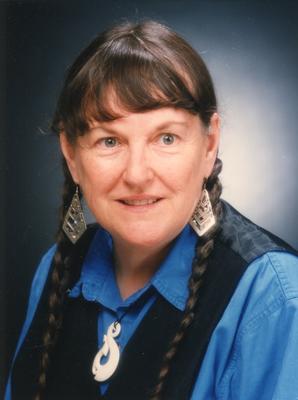 Beryl Fletcher was a feminist novelist, memoirist, and academic. Raised in a working class Mt Roskill state house, she grew up in a world where women’s lives were expected to follow narrow paths.This is experience later shaped both her feminism and her writing.
In 1972, she enrolled at the University of Waikato and completed a master’s degree in sociology. She helped organise the 1979 United Women’s Convention held in Hamilton, an event attended by around 2000 women and one that challenged deeply held social attitudes of the time.
In her late forties she achieved major success with her first novel 'The Word Burners', which won a Commonwealth Writers’ Prize for Best First Book. She went on to publish four further novels and the memoir 'A House at Karamu', a funny and moving reflection on her childhood, love of opera, and feminist awakening.
Through her writing, teaching, and activism, Beryl opened space for women’s lives and voices that had long been overlooked, making her a powerful and inspiring figure in Hamilton’s history.
Photo reference: 2024.28.282
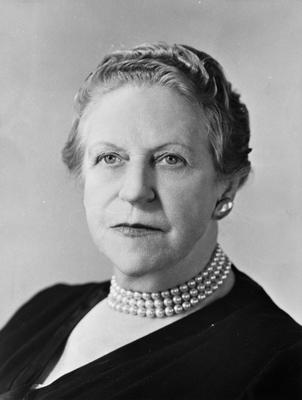 Dorothy Constance Blomfield was a dedicated community leader, voluntary worker, and one of Hamilton’s pioneering women in local government. Born in Wellington in 1893, she trained in music and clerical skills before contributing to the First World War effort through voluntary-aid nursing. After moving to Hamilton in the 1930s, she became deeply involved with the local Plunket Society, helping to establish sub-branches, fundraise, and support families across the city. She earnt a life membership in 1962 and being appointed MBE in 1966.
During the Second World War she volunteered at the Patriotic Hut in Garden Place, providing food, shelter, and support for soldiers on leave. In 1947 she was elected to Hamilton City Council as the city’s second female councillor and served for 24 years. Known for her elegance, dignity, and tireless commitment to the community, Dorothy also supported numerous clubs and organisations including the Whitiora Women’s Bowling Club, the Lyceum Club, the Red Cross, the National Council of Women, and the performing arts.
She continued to pursue creative passions later in life, taking up watercolour painting, and is remembered through a memorial plaque at Hamilton Gardens that celebrates her remarkable service to the city.
Photo reference: HCL_11648
 Rūmātiki Wright was a tireless Maaori welfare leader whose work in Hamilton left a lasting legacy for whaanau and community organisations across the region. Appointed Maaori welfare officer in Hamilton in 1949, she played a key role in establishing and strengthening branches of the Māori Women’s Health League and later the Māori Women’s Welfare League, travelling widely to support, mentor, and advocate for Maaori women. Recognised as Senior Lady Māori Welfare Officer, she chaired the first dominion conference of the Māori Women’s Welfare League in 1951 and continued to serve on its executive for a decade.
From her Hamilton base she helped develop an urban marae and, in the mid 1960s, championed Maaori pre school education by establishing playcentres throughout the Waikato Maniapoto district, encouraging the use of te reo Maaori well before the koohanga reo movement began. Her leadership combined practical action with cultural vision, strengthening community networks in Hamilton and beyond and empowering generations of Maaori women and tamariki.
Photo sourced from Te Ara - The Encyclopedia of New Zealand
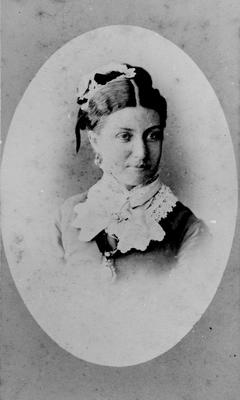 Mary Jane Lewis was born in Wales in 1852 and emigrated to New Zealand with her siblings in 1870, later marrying brewer Charles Innes at Ngaruawahia. After early business failures and her husband’s repeated bankruptcies, she proved herself financially astute, investing her own inheritance and registering property in her own name while raising a large family.
When Charles was declared bankrupt in 1888, Mary Jane publicly took over management of the Te Awamutu Brewery and soon after assumed control of the Waikato Brewery in Hamilton East, showing remarkable determination in the face of economic hardship and a devastating fire in 1897.
Widowed in 1899, she arranged loans, cleared her husband’s debts, and became the sole owner of the Waikato Brewery, later forming a successful partnership with her son that grew into a respected local business for decades. Despite enduring personal losses, including the deaths of close family members, Mary Jane Innes lived to 89 and is remembered for her resilience, independence, and lasting impact on Waikato’s business history.